Resolution Explained: What It Means for Dash Cams
Resolution explained helps you pick the right dash cam. We compare 6 models by specs to find the best clarity for your needs.
Prices and specifications come from the Amazon listing. Scores are out of 10, based on listed specifications and buyer feedback — this site does not test products.
As Amazon Associates, we earn from qualifying purchases. This means we may receive a small commission at no extra cost to you if you click through and make a purchase.
As an Amazon Associate we earn from qualifying purchases. Links on this page are affiliate links.
Understanding Dash Cam Resolution Explained
Resolution explains how much detail your dash cam captures. It is the number of pixels that make up each frame. More pixels mean a sharper image. This matters when you need to read license plates or see small road signs. You will see different labels on product listings. These labels tell you the vertical pixel count.
The most common option is 1080p. This is Full HD. The camera captures 1920 by 1080 pixels. It is clear enough for most drivers. It records smooth video without taking up too much storage space. Many buyers choose this for balance.
4K is the highest standard. It is also called Ultra HD. The resolution is 3840 by 2160 pixels. This is four times the detail of 1080p. You can zoom in on footage and still see clear text. It is useful for identifying distant objects. However, the files are much larger. You need a faster memory card to handle the data.
2K and 2.5K sit between the two. 2K usually means 1440p. 2.5K is often 2560 by 1440 pixels. These options offer better clarity than 1080p. They do not require as much storage as 4K. They are a good middle ground for many users.
When you look at specs, check the horizontal pixel count. Some brands use different terms. Always verify the exact numbers. Higher resolution helps in legal disputes. It provides evidence that is easier to understand. Choose the level that fits your needs. Consider your storage limits and viewing habits. This guide helps you understand resolution explained for your next purchase.
Choose the Right Resolution
1080p
1080p resolution provides standard high-definition clarity. This option captures enough detail for most driving situations. You can identify license plates at moderate distances. It is a practical choice for drivers who prioritize storage efficiency. Higher resolution files take up more space on your memory card. 1080p balances file size and image quality. The Garmin X110 Compact offers this level of clarity in a small form factor. It suits those who want a discreet device without complex setup. You get clear video for daily commuting and incident documentation. This resolution is widely supported and easy to manage on most devices. It remains a reliable baseline for essential recording needs.
2K
2K resolution offers a noticeable step up from 1080p. You gain sharper details in the center of the frame. This clarity helps when reading street signs or identifying vehicle features. The IIWEY N6 4-Channel Dash Cam delivers this resolution across multiple lenses. It is ideal for rideshare drivers who need comprehensive coverage. You get clear views of the front, rear, and interior. The trade-off is slightly larger file sizes than 1080p. However, the increased detail justifies the extra storage usage. This resolution provides a good balance between clarity and system performance. It ensures you capture critical information without overwhelming your storage card.
2.5K
2.5K resolution delivers high-definition video with enhanced sharpness. You capture finer details than standard 1080p or 2K options. This clarity is useful for zooming in on specific incidents. The Eivikga 3-Channel Dash Cam uses this resolution for front and cabin views. It is well-suited for taxi drivers who need interior monitoring. You get clear footage of passengers and road conditions. The higher pixel count ensures legible text and distinct features. File sizes increase compared to lower resolutions. You need adequate storage capacity to handle the data. This resolution is a strong choice for professional drivers who require detailed evidence. It offers a premium viewing experience for critical documentation.
4K
4K resolution provides the highest level of detail available in consumer dash cams. You capture extreme clarity for license plates and road signs. The ROVE R2-4K and REDTIGER F7NP offer this level of performance. These models ensure you see every detail in your footage. This resolution is best for drivers who need maximum evidence quality. You can zoom in significantly without losing image integrity. The trade-off is larger file sizes and higher storage demands. You need high-speed memory cards to record smoothly. This option suits those who prioritize clarity above all else. It provides the best chance of capturing clear evidence in complex scenarios. The investment in storage and hardware pays off in video quality.
Is Higher Resolution Worth the Upgrade
Who needs it
You should prioritize higher resolutions like 4K or 2.5K if your primary goal is capturing clear evidence for insurance claims or legal disputes. Higher pixel counts allow you to zoom into footage without losing critical details. This is essential for reading license plates from a distance or identifying specific vehicle features. If you drive in areas with complex traffic patterns or frequent disputes, the extra clarity provides a significant advantage. 2K resolution offers a middle ground, balancing detail with manageable file sizes. You will benefit most from these specs when you need to review footage later to pinpoint exact events. The sharper image ensures that small text on signs or road markings remains legible. This level of precision is valuable for documenting accidents or near-misses accurately. It gives you confidence that the recorded video will hold up under scrutiny. Choose these options if evidence quality is your main concern.
Who can skip it
You can skip high-resolution upgrades if you mainly want basic recording for general awareness. Standard 1080p resolution is sufficient for most daily driving situations. It captures enough detail to see what is happening around your vehicle. If you are concerned about storage space or battery life, lower resolution is better. Larger files from 4K cameras fill memory cards faster and require more processing power. You might prefer to prioritize other features like wide-angle lenses or night vision capabilities instead. These elements often improve overall visibility more than extra pixels do. If you only need to know if an incident occurred, not every minute detail, 1080p is practical. It balances image quality with efficient data usage. Focus on reliability and ease of use rather than maximum sharpness. This approach keeps your system simple and cost-effective. You save resources for features that enhance daily driving safety.
Key Dash Cam Terms
Image Sensor
The chip that converts light into digital data. Larger sensors capture better low-light images. Common types include CMOS and Sony Starvis models for night driving clarity.
Camera Configuration
The number of lenses and their placement. Single cameras face forward. Dual setups include front and rear views. Some models add an interior-facing cabin camera for comprehensive coverage.
Connectivity
How the camera links to your phone or car. Wi-Fi allows app access for file transfer. GPS modules log speed and location data directly into video metadata for evidence.
Included Storage
The memory card provided with the device. Some packages include a basic microSD card. Others require you to purchase compatible high-endurance storage separately to ensure reliable recording.
Maximum Storage
The largest card the unit supports. Common limits are 128GB or 256GB. Higher capacities allow longer continuous recording before the loop recording feature overwrites older footage automatically.
Control Method
How you operate the device. Physical buttons allow manual start or stop. Touchscreens provide menu navigation. Smartphone apps enable remote control and live view from a distance.
Color Profile
The visual style of the recorded footage. Standard modes prioritize clarity. Enhanced color modes boost saturation. Some units offer night mode adjustments to reduce noise in dark conditions.
| # | Product | Best for | Price |
|---|---|---|---|
| 1 | IIWEY N5 4-Channel 2.5K Dash Cam | 360-degree vehicle monitoring | |
| 2 | ROVE R2-4K Front and Rear Dash Cam | Drivers needing night clarity and GPS tracking | |
| 3 | IIWEY N6 4-Channel 2K Dash Cam | multi-angle rideshare and fleet monitoring | |
| 4 | Eivikga 3-Channel 4K Dash Cam | Rideshare and taxi drivers needing cabin coverage | |
| 5 | Garmin X110 Compact 1080p Dash Cam | drivers seeking a compact, voice-controlled 1440p dash cam | |
| 6 | REDTIGER F7NP 4K Front Rear Dash Cam | Drivers needing 4K front clarity and night vision |

IIWEY N5 4-Channel 2.5K Dash Cam
Best for: 360-degree vehicle monitoring
- Resolution
- 1080p
- Camera Configuration
- 4 Channel
- Video Resolution
- 2.5K
- Field of View
- 170°
- Connectivity
- 5GHz WiFi
- Included Storage
- 128GB
The IIWEY N5 records 360-degree video using four cameras. The front lens captures 2.5K resolution, while the rear, interior, and side cameras record in 1080p. It includes a 128GB card and connects via 5GHz WiFi. This setup provides a complete view of your vehicle's surroundings. It suits drivers who need to monitor all angles simultaneously.
- 2.5K front camera resolution
- Four-channel 360-degree coverage
- Includes 128GB storage card
- Fast 5GHz WiFi connectivity
- Lower 1080p resolution for rear and interior cameras
- Absence of built-in GPS tracking
- Requires separate hardwire kit for parking mode
- You need a full 360-degree view of your vehicle
- You want a high-resolution front recording
- You prefer fast WiFi app transfers
- You require GPS location data
- You want 4K resolution on all channels
- You need parking mode without extra parts
Verdict: The IIWEY N5 4-Channel Dash Cam fits drivers who need a comprehensive 360-degree view with a high-quality front lens. It is a solid choice for monitoring all vehicle angles, provided you do not need built-in GPS.

ROVE R2-4K Front and Rear Dash Cam
Best for: Drivers needing night clarity and GPS tracking
- Resolution
- 4K
- Camera Configuration
- Front and Rear
- Video Resolution
- 4K Upscaled
- Image Sensor
- Sony STARVIS 2 IMX675
- Connectivity
- 5.8GHz, 2.4GHz Wi-Fi
- Included Storage
- 128GB
The ROVE R2-4K records front video at 2.5K upscaled to 4K and rear video at 1080P. It uses a Sony STARVIS 2 IMX675 sensor for better low-light clarity. Built-in GPS tracks speed and location. You get a 128GB card and dual-band Wi-Fi for fast downloads. This setup suits drivers who want high-detail footage without the bulk of native 4K sensors.
- Sony STARVIS 2 IMX675 sensor for enhanced night vision
- Front camera upscales 2.5K footage to 4K for sharper detail
- Built-in GPS records speed and route data
- Includes 128GB microSD card
- Dual-band Wi-Fi supports up to 20 MB/s download speeds
- Front resolution is upscaled 4K, not native 4K
- Rear camera records only at 1080P
- Hardwire kit for parking mode is not included
- You want high-detail front footage with a reliable night sensor
- You need GPS data stamped on your videos
- You prefer a system that includes storage
- You require native 4K resolution for both cameras
- You need a rear camera with 2.5K or 4K resolution
- You want a complete parking mode setup without buying extra parts
Verdict: The ROVE R2-4K Dual Dash Cam offers strong low-light performance and detailed upscaled front footage. It fits drivers who prioritize night clarity and GPS tracking over native 4K rear resolution.

IIWEY N6 4-Channel 2K Dash Cam
Best for: multi-angle rideshare and fleet monitoring
- Resolution
- 2K
- Camera Configuration
- 4-Channel
- Video Resolution
- 2K (1440p)
- Image Sensor
- STARVIS
- Field of View
- 170° front/rear, 150° sides
- Connectivity
- 5.8GHz Wi-Fi 6
The IIWEY N6 records 2K video from four angles simultaneously. You get 170-degree views front and rear, plus 150-degree side coverage. It uses STARVIS sensors and includes Wi-Fi 6 for fast transfers. A 128GB card is inside. This setup covers all blind spots. It suits rideshare drivers or fleet managers who need total vehicle visibility.
- Four cameras record 2K resolution simultaneously
- 170-degree front and rear fields of view
- 150-degree side camera coverage reduces blind spots
- Includes 128GB storage card for immediate use
- Wi-Fi 6 enables quick video downloads
- 2K resolution is lower than the 4K options on this list
- No built-in battery requires hardwiring for parking mode
- Side cameras have narrower 150-degree fields of view
- You need to monitor all four sides of your vehicle
- You drive a rideshare or fleet vehicle
- You want simultaneous multi-angle recording
- You require 4K resolution for maximum detail
- You need a wireless parking mode setup
- You prefer a single-camera compact design
Verdict: The IIWEY N6 4-Channel 2K Dash Cam provides comprehensive coverage for commercial or rideshare use. You get total visibility around your vehicle, though you sacrifice the higher resolution found in other list items.

Eivikga 3-Channel 4K Dash Cam
Best for: Rideshare and taxi drivers needing cabin coverage
- Resolution
- 2.5K
- Camera Configuration
- 3-Channel
- Video Resolution
- 4K
- Image Sensor
- STARVIS 2 IMX675
- Connectivity
- 5GHz Wi-Fi
- Included Storage
- 64GB
This Eivikga unit records three simultaneous angles: 4K front, 2.5K cabin, and 2.5K rear. The Sony STARVIS 2 IMX675 sensor handles low-light scenes with an F/1.6 lens. Built-in GPS tracks your route and speed. You connect via 5GHz Wi-Fi to preview footage on your phone. It includes a 64GB card. This setup suits rideshare drivers or families needing full interior and exterior coverage.
- 4K front camera captures road signs and lane details
- STARVIS 2 IMX675 sensor improves night visibility
- 5GHz Wi-Fi enables fast app connectivity
- Built-in GPS logs speed and location data
- Included 64GB storage is smaller than the 128GB cards on other list items
- Cabin and rear cameras use 2.5K resolution, which is lower than the 4K front unit
- Hardwire kit for parking mode is sold separately
- You drive for rideshare or taxi services
- You need simultaneous interior and exterior recording
- You want high-resolution front footage with 5GHz Wi-Fi
- You require 4K resolution on all three cameras
- You want a larger included storage capacity
- You need parking mode without buying extra hardware
Verdict: Eivikga 3-Channel 4K+2.5K Dash Cam fits drivers who need detailed front clarity and cabin monitoring. It is a practical option for rideshare use where interior recording is essential.
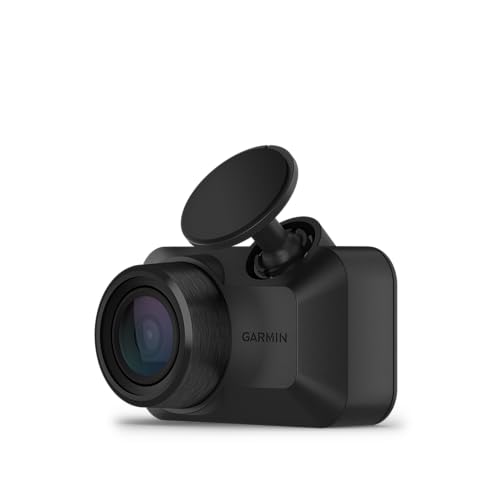
Garmin X110 Compact 1080p Dash Cam
Best for: drivers seeking a compact, voice-controlled 1440p dash cam
- Resolution
- 1080p
- Video Resolution
- 1440p HD
- Field of View
- 140°
- Control Method
- Voice Control
- Color
- Black
- Dimensions
- 2.8 × 0.8 × 1.7 inches
The Garmin X110 records 1440p HD video with a 140-degree field of view. It features a 2.4-inch LCD display and voice control. The unit is compact, measuring 2.8 inches long and weighing 2.2 ounces. It includes a built-in polarizer lens to reduce glare. This dash cam suits drivers who prioritize a small footprint and straightforward voice commands over higher resolution options.
- Records 1440p HD video
- 140-degree field of view
- 2.4-inch LCD display
- Built-in polarizer lens
- 1440p resolution is lower than the 4K and 2.5K options on this list
- 140-degree field of view is narrower than the 360-degree options on this list
- You want a compact dash cam that is hard to notice on your windshield
- You prefer using voice control to save video clips
- You value a built-in polarizer to reduce windshield glare
- You need 4K or 2.5K resolution for maximum detail
- You require a 360-degree view to capture all sides of your vehicle
- You want a dash cam with a rear camera included
Verdict: The Garmin X110 Compact 1080p Dash Cam is a solid choice for drivers who want a small, unobtrusive device with clear 1440p video and voice control. It fits those who prioritize a compact build and glare reduction over the highest resolution or widest angle available.

REDTIGER F7NP 4K Front Rear Dash Cam
Best for: Drivers needing 4K front clarity and night vision
- Resolution
- 4K
- Camera Configuration
- Front & Rear
- Video Resolution
- 4K
- Image Sensor
- STARVIS 2
- Field of View
- 170° front, 140° rear
- Connectivity
- 5.8GHz Wi-Fi
The REDTIGER F7NP records 4K front and 1080P rear video using a STARVIS 2 sensor. This sensor handles low light well, while WDR balances exposure. It includes a 128GB card and 5.8GHz WiFi for fast downloads. You get a 170-degree front view and 140-degree rear view. The unit uses a supercapacitor for heat resistance. It suits drivers needing clear day and night footage.
- 4K front and 1080P rear resolution
- STARVIS 2 image sensor for night vision
- 170-degree front and 140-degree rear field of view
- Includes free 128GB memory card
- Built-in 5.8GHz WiFi for 20MB/s downloads
- Rear camera records at 1080P, lower than the 4K or 2.5K rear options on this list
- 170-degree front view is narrower than the 360-degree views of other products here
- Parking mode requires a separate hardwire kit for 24/7 operation
- You want 4K front resolution with a dedicated rear camera
- You need reliable night recording with a STARVIS 2 sensor
- You prefer a supercapacitor for better heat resistance
- You require a 360-degree view for complete coverage
- You need a rear camera with 4K or 2.5K resolution
- You want a compact single-lens design without a rear unit
Verdict: The REDTIGER F7NP 4K Front Rear Dash Cam offers high-resolution front recording with a capable night sensor. It fits drivers who prioritize front clarity and included storage over a wider field of view.
Specifications side by side
| Spec | IIWEY N5 4-Channel 2.5K Dash Cam | ROVE R2-4K Front and Rear Dash Cam | IIWEY N6 4-Channel 2K Dash Cam | Eivikga 3-Channel 4K Dash Cam | Garmin X110 Compact 1080p Dash Cam | REDTIGER F7NP 4K Front Rear Dash Cam |
|---|---|---|---|---|---|---|
| Camera Configuration | 4 Channel | Front and Rear | 4-Channel | 3-Channel | – | Front & Rear |
| Video Resolution | 2.5K | 4K Upscaled | 2K (1440p) | 4K | 1440p HD | 4K |
| Image Sensor | – | Sony STARVIS 2 IMX675 | STARVIS | STARVIS 2 IMX675 | – | STARVIS 2 |
| Field of View | 170° | – | 170° front/rear, 150° sides | – | 140° | 170° front, 140° rear |
| Connectivity | 5GHz WiFi | 5.8GHz, 2.4GHz Wi-Fi | 5.8GHz Wi-Fi 6 | 5GHz Wi-Fi | – | 5.8GHz Wi-Fi |
| Included Storage | 128GB | 128GB | 128GB | 64GB | – | 128GB |
| Resolution | 1080p | 4K | 2K | 2.5K | 1080p | 4K |
| Control Method | App Control | App Control | App Control | – | Voice Control | – |
| Color | Black | Black | Black | Black-Viidure | Black | Black |
| Recommended Use | Cars | – | Cars | – | – | – |
| Detection Coverage | – | Front and Rear Detection | – | – | – | – |
| GPS Features | – | Built-in GPS | Built-in GPS | Built-in GPS | – | – |
| Dimensions | 6.9 × 5.47 × 3.42 inches | 2.76 × 5.51 × 4.33 inches | 1.38 × 5.31 × 3.15 inches | 1 × 1 × 1 inches | 2.8 × 0.8 × 1.7 inches | 3.74 × 1.46 × 0.79 inches |
| Weight | – | 4.48 ounces | – | 1 pounds | 2.2 ounces | 4 ounces |
| Model | 1 | 1 | N6 | A8 pro | 010-02900-00 | F7NP |
| Size | – | – | – | – | – | F7NP-128GB SD Card |
Frequently asked questions
Does 4K resolution always mean the rear camera is also 4K?
Not necessarily. Many dual-camera systems label the entire unit by its front lens resolution. The ROVE R2-4K and REDTIGER F7NP offer 4K front recording but use upscaled or lower-resolution rear lenses. You should check the specific attributes for each lens. This setup prioritizes front clarity while managing file sizes for the rear view.
What resolution do multi-channel dash cams typically use?
Multi-channel units often balance coverage with storage limits. The IIWEY N5 uses 1080p for its four channels, providing a complete 360-degree view. The IIWEY N6 opts for 2K resolution to maintain sharper details across all angles. These choices allow you to monitor your entire vehicle without overwhelming your storage card.
Is 2.5K resolution better than 1080p for rideshare drivers?
Yes, if you need interior clarity. The Eivikga 3-Channel Dash Cam combines 4K front recording with 2.5K cabin monitoring. This resolution captures more detail inside the vehicle than standard 1080p. It helps you clearly record interactions with passengers. The extra pixels provide better evidence for disputes compared to lower resolution options.
How does resolution affect the size of video files?
Higher resolutions generate significantly larger files. A 4K camera records more pixel data per second than a 1080p model. The Garmin X110 offers a compact 1440p option that balances clarity with manageable file sizes. You will need larger storage cards, like the included 128GB options, to hold the footage for longer periods.
Can I zoom into 1080p footage and still see details?
Zooming reduces quality, but 1080p can still be useful. The Garmin X110 provides clear 1440p video, which is sharper than standard 1080p. However, even 1080p allows you to identify basic features. It is a practical choice if you prioritize a small device size over maximum resolution. You trade some detail for a less obtrusive mount.
Do higher resolutions require better image sensors?
Higher pixel counts often rely on advanced sensors for low-light performance. The Eivikga and ROVE models use Sony IMX675 or STARVIS sensors. These chips help capture clear images in dark conditions. Without good sensors, high resolution can result in grainy night footage. The sensor quality is just as important as the pixel count for overall video quality.
See also
Where these figures come from
The price, the list price it is compared against and the specifications on this page are read from the Amazon product listing. Scores are out of 10, based on listed specifications and buyer feedback, and no product here has been handled or measured by us. The award ribbons are calculated across the products in this guide only, and each one states the figure it was based on.


