Mitsubishi Mini Splits Compared: Thermal Control for Gaming Rooms
Mitsubishi is widely recognized across the HVAC industry for manufacturing exceptionally reliable, whisper-quiet ductless air conditioning systems engineered to deliver granular zone climate control. For power users managing dedicated gaming dens, media rooms, and home theaters, thermal management is a constant priority as multi-monitor workstations, discrete graphics processing units, and high-wattage gaming hardware continuously generate…
Prices and specifications come from the Amazon listing. Scores are out of 10, based on listed specifications and buyer feedback — this site does not test products.
Awards Worked out automatically from the Amazon listings of the 5 products in this guide.
-
Highest rated
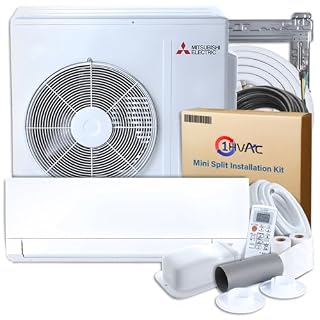
Mitsubishi 24000 BTU 21.5 SEER2 GX-Series for Large Modern Living Spaces
Our score: 9.0/10 — the highest of the 5 scored in this guide
As Amazon Associates, we earn from qualifying purchases. This means we may receive a small commission at no extra cost to you if you click through and make a purchase.
Mitsubishi is widely recognized across the HVAC industry for manufacturing exceptionally reliable, whisper-quiet ductless air conditioning systems engineered to deliver granular zone climate control. For power users managing dedicated gaming dens, media rooms, and home theaters, thermal management is a constant priority as multi-monitor workstations, discrete graphics processing units, and high-wattage gaming hardware continuously generate intense heat. Deploying high-efficiency mitsubishi mini splits ensures that high thermal loads are neutralized without generating disruptive ambient hums or fan turbulence that can ruin spatial audio or bleed into sensitive broadcast microphones.
Across the five systems examined in this mitsubishi mini split comparison, the lineup differentiates itself primarily through cooling outputs scaled from 9,000 BTU up to 24,000 BTU, operational sound thresholds measured between 30 dB and 50 dB, and efficiency benchmarks ranging from baseline SEER 18 platforms to advanced SEER 25.6 and SEER2 21.5 tiers designed for minimal power consumption.
Mitsubishi Mini Split Air Conditioners Compared
| Model | Cooling Capacity | Efficiency Rating | Sound Level | Rated Coverage |
|---|---|---|---|---|
| Mitsubishi 18,000 BTU SEER 18 Wall | 18,000 BTU | SEER 18 | 30 dB | Up to 750 sq ft |
| Mitsubishi 9,000 BTU SEER 18 Wall | 9,000 BTU | SEER 18 | 30 dB | Up to 350 sq ft |
| Mitsubishi 24,000 BTU SEER 18 Wall | 24,000 BTU | SEER 18 | 30 dB | Up to 1000 sq ft |
| Mitsubishi 24000 BTU 21.5 SEER2 GX-Series | 24,000 BTU | 21.5 SEER2 | 50 dB | 1000–1300 sq ft |
| Mitsubishi 12,000 BTU SEER 25.6 Wall | 12,000 BTU | SEER 25.6 | 30 dB | Up to 550 sq ft |
Pick 01
Mitsubishi 18,000 BTU SEER 18 Wall for Mid-Sized Media Rooms

Best for: Mid-sized gaming rooms and shared media spaces
- Our score
- 8.0 out of 10
- Brand
- Mitsubishi
Pros
- Quiet 30 dB operation
- 18,000 BTU cooling and heating
- Anti-corrosion outdoor blue fin coating
Cons
- Requires 220V 20-amp electrical service
- Baseline SEER 18 efficiency rating
The Mitsubishi 18,000 BTU SEER 18 Wall is an inverter-driven ductless mini-split system rated at 1.5 tons, providing a strong balance between cooling muscle and physical footprint. Designed to service spaces measuring up to 750 square feet, this residential split system pairs an 18,000 BTU cooling capacity with a robust 20,000 BTU heating capacity, making it a complete year-round climate solution. The outdoor condenser unit incorporates a specialized anti-corrosion blue fin treatment across its aluminum heat exchanger coils, providing defensive resistance against outdoor airborne contaminants, salt, and sulfur in humid or coastal environments.
Under heavy processing loads, multiple gaming consoles, secondary displays, and home theater receivers generate significant thermal buildup. Even when pairing compact companion rigs such as a dell micro pc for capture streaming alongside a primary gaming rig, heat can accumulate quickly. This unit stabilizes the indoor environment via an inverter-driven compressor that uses Pulse Amplitude Modulation (PAM) alongside a Linear Expansion Valve (LEV) to dial in exact cooling capacity rather than cycling on and off aggressively. Operating at an unobtrusive 30 dB sound rating, it preserves acoustic clarity inside media zones. Additional operational conveniences include Jet Cool rapid cooling, an automated dehumidifying mode, a 12-hour timer, and an automatic restart function that restores user preferences following electrical outages.
This model is ideal for enthusiasts managing dedicated mid-sized entertainment spaces or shared gaming rooms between 500 and 750 square feet that require higher cooling overhead than entry-level units provide. It utilizes a 220V connection on a 20-amp breaker and pulls up to 2170 watts under full demand. If your setup occupies a more compact footprint, stepping down to a smaller capacity ensures you do not overpower your square footage.
Pick 02
Mitsubishi 9,000 BTU SEER 18 Wall for Compact Gaming Dens

Best for: Compact streaming booths and bedroom studios
- Our score
- 8.6 out of 10
- Brand
- Mitsubishi
Pros
- Ultra-low 30 dB acoustic profile
- Fast cooling Jet Cool mode
- Inverter-driven compressor efficiency
Cons
- Limited to 350 square feet
- App controls require separate configuration
Built intentionally for compact zones, the Mitsubishi 9,000 BTU SEER 18 Wall delivers a focused 0.7-ton cooling capacity paired with 14,500 BTU of heating output. Specified for rooms up to 350 square feet, this residential split system provides precision thermal regulation for smaller gaming offices, streaming nooks, or private bedroom setups where floor real estate is at an absolute premium. The system ships in a clean white chassis measuring 34 inches wide and 14 inches high, utilizing a wall-mounted profile that keeps circulation lines elevated and clear of equipment desks.
Acoustic performance is critical when configuring live broadcast microphones or listening to subtle directional footsteps in competitive gaming. This 9,000 BTU variant produces a modest 30 dB sound profile, matching the hum of a gentle whisper. The inverter compressor continually balances thermal output using Pulse Amplitude Modulation to eliminate abrupt compressor cut-ins. The listing specifies five discrete fan speed selections—Quiet, Low, Medium, High, and Super High—supplemented by an automated fan mode and Mitsubishi’s proprietary Smart Set memory feature. It also includes an anti-corrosion blue fin coating on the outdoor heat exchanger to prevent environmental decay, a 12-hour programmable timer, auto clean, fast cooling, and a 15-amp breaker requirement over 220V lines.
For independent streamers, PC enthusiasts, and console players who inhabit smaller, enclosed quarters, this model represents the best mitsubishi mini split for gaming room applications under 350 square feet. It provides dedicated climate control without drawing excessive power, rated at 1800 watts. However, if your space features multiple gaming rigs, extensive showcase shelving displaying a mini gt porsche collection, or open archways into adjacent rooms, step up to a higher BTU bracket to prevent compressor strain.
Pick 03
Mitsubishi 24,000 BTU SEER 18 Wall for Spacious Entertainment Hubs

Best for: Spacious multi-rig basements and game lounges
- Our score
- 8.2 out of 10
- Brand
- Mitsubishi
Pros
- Massive 24,000 BTU cooling capacity
- Whisper-quiet 30 dB sound rating
- Protective outdoor heat exchanger coating
Cons
- High 2800-watt power draw
- Heavy outdoor unit requirement
When high-end media rooms expand into wide footprints, thermal demands escalate rapidly. The Mitsubishi 24,000 BTU SEER 18 Wall is a 2-ton high-capacity ductless heat pump system engineered to regulate spaces up to 1,000 square feet. Generating 24,000 BTU of cooling and up to 26,500 BTU of maximum heating, this system easily handles high-density thermal zones filled with home theater projectors, multizone amplifiers, and multi-user LAN setups running high-draw graphics cards simultaneously.
Despite its heavy-duty output, the indoor wall unit maintains the brand’s signature 30 dB sound rating, ensuring that expansive home theaters remain free from droning fan intrusion during quiet movie scenes. It is powered by an inverter compressor utilizing Pulse Amplitude Modulation and LEV metering to maximize energy transfer while drawing 2800 watts under maximum load. Like its sibling units in the SEER 18 line, the outdoor coil is treated with an anti-corrosion blue fin layer to safeguard the aluminum fins against airborne sulfur, salt, and industrial moisture. A handheld remote controller is included in the package, enabling rapid selection of Jet Cool, dehumidifying mode, auto restart after power interruptions, and the 12-hour timer.
This 24,000 BTU configuration suits broad basement entertainment suites, open-concept media lounges, and commercial-grade streaming offices where high occupant counts and large thermal footprints overwhelm smaller splits. It operates across 220V wiring with a 20-amp breaker requirement. Users looking for similar 2-ton cooling capacity paired with modern smart connectivity and higher energy efficiency ratings can alternatively consider the GX-Series platform.
Pick 04
Mitsubishi 24000 BTU 21.5 SEER2 GX-Series for Large Modern Living Spaces
- Highest rated Our score: 9.0/10 — the highest of the 5 scored in this guide

Best for: Smart-home enthusiasts with large living areas
- Our score
- 9.0 out of 10
- Brand
- 1HVAC
Pros
- Built-in Wi-Fi Comfort app support
- Modern R-454B refrigerant
Cons
- Higher 50 dB acoustic level
- Requires professional refrigerant line evacuation
The Mitsubishi 24000 BTU 21.5 SEER2 GX-Series represents an advanced ductless platform engineered to service large spaces spanning 1,000 to 1,300 square feet. Unlike standard baseline models, this GX-Series unit achieves an elevated 21.5 SEER2 efficiency rating and carries Energy Star certification. It utilizes modern R-454B refrigerant and comes bundled with a 15-foot line set and installation kit, arriving pre-charged from the factory for line runs up to 25 feet. Because it uses R-454B and requires vacuum testing, the listing notes it is not a DIY mini split and mandates professional installation with proper line evacuation.
Equipped with an inverter-driven rotary compressor, the GX-Series maintains broad operational capabilities, functioning reliably in cooling modes from 14°F up to 115°F and heating modes down to -5°F. Internally, the air handler is outfitted with Dual Barrier Coating, a patented treatment that minimizes dust, lint, and debris accumulation on internal fans and coils. Additional operational modes include Smart Dry Mode, which automatically synchronizes fan and compressor speeds for humidity control, Self Clean Mode, and Powerful Mode for rapid thermal recovery. Built-in Wi-Fi comes standard, allowing smart home users to monitor settings, adjust scheduling, and calibrate fan speeds via the Comfort app or the included wireless remote.
This high-output system is best for owners of open-floor media rooms, converted garages, or large entertainment basements who want integrated smart app control without third-party adapters. In terms of acoustics, this system lists a sound level of 50 dB, which is higher than the 30 dB rating found on the brand’s traditional SEER 18 platforms. If ultra-low background noise is your highest priority for audio-sensitive broadcasting, the whisper-level 30 dB units remain preferable, but for sheer modern efficiency, smart Wi-Fi integration, and large-area coverage, the GX-Series stands out.
Pick 05
Mitsubishi 12,000 BTU SEER 25.6 Wall for High Efficiency Studios

Best for: Energy-conscious gamers in standard bedrooms
- Our score
- 8.0 out of 10
- Brand
- Mitsubishi
Pros
- Exceptional SEER 25.6 Energy Star efficiency
- Quiet 30 dB sound rating
- Built-in Comfort app Wi-Fi connectivity
Cons
- Capped at 550 square feet coverage
- Requires dedicated 220V circuit
The Mitsubishi 12,000 BTU SEER 25.6 Wall delivers class-leading energy conservation within the single-zone product family. Rated at 1 ton with 12,000 BTU of cooling and 12,000 BTU of heating, this Energy Star certified mini split covers rooms up to 550 square feet. It achieves an impressive 25.6 SEER rating while consuming an estimated annual energy rate of only 1133 watt-hours, making it a standout choice for reducing utility consumption in rooms where gaming equipment runs continuously throughout the day.
Inside the air handler, a rotary scroll compressor works in conjunction with Pulse Amplitude Modulation and LEV metering to supply exceptionally smooth thermal control. Modern media and production rooms running power-hungry equipment, such as an editing station or a pc hp 16 gb ram desktop setup, will benefit from the balanced 12,000 BTU cooling reserve. Built-in Wi-Fi capabilities allow direct synchronization with the Comfort app, granting complete mobile control over schedules, modes, and fan levels alongside the included handheld remote. The system maintains an ultra-low 30 dB noise profile, features a 12-hour timer, and carries the blue fin anti-corrosion condenser treatment for extended service life.
Gamers, audio creators, and remote workers with dedicated 150 to 550 square foot offices will find this 12,000 BTU configuration particularly compelling. Operating across a 220V circuit with a 15-amp breaker and a 2000-watt rating, it combines whisper-quiet 30 dB acoustics with the highest efficiency ratio in this roundup. It gives way to the 18,000 or 24,000 BTU platforms only when room dimensions exceed its 550-square-foot coverage envelope.
How to Choose the Right Mitsubishi Mini Split Air Conditioner
Selecting the optimal mitsubishi ductless mini split requires matching your room’s physical dimensions and equipment heat output against capacity, noise constraints, and operational efficiency. The primary consideration is total thermal load. While square footage provides a starting benchmark, high-performance gaming rigs, multiple monitors, and audio amplifiers output substantial additional heat. For a compact studio or bedroom up to 350 square feet, the 9,000 BTU SEER 18 platform delivers focused cooling without short-cycling. Medium entertainment spaces up to 550 square feet match well with the 12,000 BTU SEER 25.6 unit, whereas mid-sized rooms up to 750 square feet benefit from the 18,000 BTU SEER 18 model. Expansive areas or multi-seat simulator rooms spanning 1,000 square feet or more require the 24,000 BTU SEER 18 or the 24,000 BTU GX-Series to prevent thermal throttling.
Acoustic performance is the next critical metric when choosing which mitsubishi mini split to buy. If your room serves as a recording studio, streaming booth, or home cinema, mitsubishi mini split noise level should dictate your choice. Models like the 9,000 BTU, 12,000 BTU, 18,000 BTU, and 24,000 BTU SEER 18 units operate at a quiet 30 dB sound rating, preventing unwanted background noise during voice chat or vocal recording. Conversely, the 24000 BTU GX-Series is rated at 50 dB; while still quiet by traditional air conditioning standards, it introduces a more noticeable air velocity sound floor that may require software noise gates during live microphone capture.
Energy efficiency and control protocols round out the selection criteria. If long-term power conservation is paramount, the Mitsubishi 12,000 BTU unit with its 25.6 SEER rating offers exceptional efficiency for standard rooms, while the GX-Series provides 21.5 SEER2 efficiency for larger footprints. Additionally, consider how you intend to control the system. Both the 12,000 BTU SEER 25.6 Wall and the 24,000 BTU GX-Series provide direct Wi-Fi compatibility with the Comfort app for remote smartphone management, whereas the baseline SEER 18 units rely on included handheld remote controllers.
FAQ
What makes a Mitsubishi ductless mini split effective for a gaming room?
Gaming setups generate concentrated heat from processors, power supplies, and graphics cards that often overpowers central HVAC systems. Mitsubishi ductless systems deliver dedicated zone cooling directly to the space, utilizing inverter compressors to dynamically throttle cooling output and keep temperatures stable without aggressive cycling.
How does Mitsubishi mini split noise level affect microphone streaming and audio?
Most single-zone Mitsubishi systems featured here operate at an ultra-low 30 dB sound rating, which is comparable to a quiet whisper. This allows gamers and audio producers to run the air conditioner continuously without picking up background rumble or fan hiss on cardioid or condenser microphones.
Which Mitsubishi mini split to buy for a standard bedroom gaming setup?
For a standard bedroom gaming space measuring up to 350 square feet, the Mitsubishi 9,000 BTU SEER 18 Wall provides ideal capacity and whisper-quiet 30 dB sound. If the bedroom is slightly larger, up to 550 square feet, or houses high-wattage equipment, the 12,000 BTU SEER 25.6 Wall is the better choice due to its higher capacity and class-leading efficiency.
What is the difference between SEER and SEER2 ratings on Mitsubishi systems?
SEER and SEER2 are metrics used to measure cooling efficiency over an entire season. SEER2 represents an updated testing procedure that accounts for higher external static pressure, providing a more rigorous real-world measurement. A unit rated at 21.5 SEER2, such as the GX-Series, reflects modern compliance under these updated testing protocols.
Can Mitsubishi mini splits handle both winter heating and summer cooling?
Yes, all five Mitsubishi ductless systems in this guide are heat pump split systems capable of cooling and heating. They feature dedicated heating capacities and include automated inverter adjustments to maintain room comfort throughout both hot summers and cold winters.
Where these figures come from
The price, the list price it is compared against and the specifications on this page are read from the Amazon product listing. Scores are out of 10, based on listed specifications and buyer feedback, and no product here has been handled or measured by us. The award ribbons are calculated across the products in this guide only, and each one states the figure it was based on.


