Top ZEISS Wide-Angle Lenses Ranked for Extreme Optical Performance
ZEISS has long stood as an industry benchmark in optical engineering, renowned for delivering camera lenses that exhibit exceptional contrast, richly saturated colors, and uncompromising edge-to-edge sharpness. In wide-angle photography, controlling optical aberrations, barrel distortion, and peripheral light falloff presents an exacting engineering challenge. ZEISS resolves these hurdles by uniting advanced aspherical elements, specialized multicoatings,…
Prices and specifications come from the Amazon listing. Ratings are the average left by Amazon buyers — this site does not test products.
Awards Worked out automatically from the Amazon listings of the 3 products in this guide — no editorial scoring.
-
Highest rated
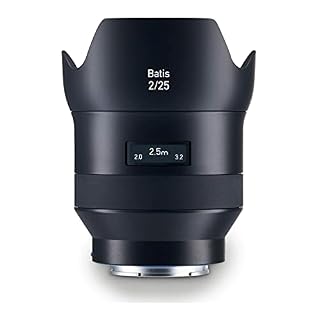
ZEISS Batis 25mm f 2.0 for Documentary and Environmental Street Photography
4.7★ average from Amazon buyers — the highest of the 3 rated in this guide
As Amazon Associates, we earn from qualifying purchases. This means we may receive a small commission at no extra cost to you if you click through and make a purchase.
ZEISS has long stood as an industry benchmark in optical engineering, renowned for delivering camera lenses that exhibit exceptional contrast, richly saturated colors, and uncompromising edge-to-edge sharpness. In wide-angle photography, controlling optical aberrations, barrel distortion, and peripheral light falloff presents an exacting engineering challenge. ZEISS resolves these hurdles by uniting advanced aspherical elements, specialized multicoatings, and durable metal barrel designs built to endure demanding field conditions. For visual artists, landscape photographers, and entertainment content creators seeking superior optical performance, investing in a dedicated zeiss wide angle prime lens ensures that expansive scenes retain their structural integrity and micro-contrast across the entire frame. While casual formats such as instax wide instant cameras introduce enthusiasts to wide-angle views, precision prime optics require rigorous engineering to keep horizon lines straight and micro-textures distinct.
In this zeiss wide angle lens comparison, the featured models differ distinctly across their sensor coverage, focal lengths, and camera mounts: the Batis 18mm f/2.8 delivers an expansive full-frame ultra-wide perspective for Sony E-mount systems, the Touit 12mm f/2.8 is tailored specifically for APS-C Fujifilm X-mount cameras, and the Batis 25mm f/2.0 provides a faster, moderately wide perspective suited for documentary capture on full-frame Sony bodies.
ZEISS Wide-Angle Lenses Compared
Comparing these three optics demonstrates how focal length and sensor design dictate physical perspective and field utility. The two Batis models provide dedicated full-frame sensor coverage for the Sony E-mount mirrorless ecosystem, incorporating digital OLED displays directly into the outer barrel for instantaneous readouts of focal distance and depth of field. In contrast, the Touit optic utilizes a dedicated APS-C optical configuration engineered for Fujifilm X-mount camera bodies, relying on a Distagon floating elements design to suppress distortion across its wider field coverage without requiring a physically massive barrel.
Aperture values also separate these designs based on creative intent. Both the 18mm Batis and the 12mm Touit prioritize wide-angle expanse with a maximum f/2.8 aperture, making them optical instruments built for broad exterior environments, sweeping vistas, and architectural geometry. The 25mm Batis widens its light-gathering capacity to f/2.0, providing an extra stop of illumination that proves critical for dim interior scenes, night documentary work, and environmental portraiture where shallow depth of field helps isolate subjects from complex backgrounds.
| Model | Focal Length | Compatible Camera Mount | Real Angle of View | Image Stabilization |
|---|---|---|---|---|
| ZEISS Batis 18mm f 2.8 | 18 mm | Sony E | 99.1 degrees | Optical |
| ZEISS Touit 2.8 12 Wide-Angle Lens | 12 mm | Fujifilm X | 89 degrees | Optical |
| ZEISS Batis 25mm f 2.0 | 25 mm | Sony E | 72 degrees | Optical |
Pick 01
ZEISS Batis 18mm f 2.8 for Landscape and Astro Photography

Best for: Landscape and astrophotography on full-frame Sony
- Buyer rating
- 4.6 average left by Amazon buyers
- Brand
- Zeiss
Pros
- Super-wide 99.1-degree view
- Innovative OLED display
- Weatherproof metal build
- Optical image stabilization
Cons
- Fixed 18mm focal length
- F/2.8 maximum aperture
The ZEISS Batis 18mm f 2.8 is an ultra-wide prime lens engineered specifically for Sony E-mount mirrorless cameras with full-frame sensors. Featuring an expansive real angle of view measuring 99.1 degrees, this super wide-angle lens allows creators to encompass vast natural horizons, imposing architectural structures, and sprawling night skies within a single composed frame. The optical configuration delivers consistently high resolution and contrast right into the extreme corners of the frame, ensuring that fine details such as distant foliage or pinpoint stars avoid the chromatic smearing that frequently degrades lesser wide-angle optics. Just as wearable optical designs like meta glasses clear frames require specialized surface coatings to preserve visual clarity in unpredictable light, this lens utilizes multicoated optical elements developed by ZEISS to suppress stray light and eliminate ghosting flares.
Durability and operational feedback are paramount components of the Batis design philosophy. The lens is built with a robust, weatherproof metal construction engineered with seals that actively keep out environmental dust and spray water, providing critical reliability during adverse weather shoots in rugged outdoor landscapes. An innovative OLED display is integrated into the top surface of the lens barrel, presenting focus distance and precise depth-of-field measurements in clean digital text. This illuminated readout proves indispensable for astrophotographers and night shooters working in pitch darkness, allowing for instant hyperfocal distance verification without requiring a headlamp or test exposures. Autofocus is handled by a smooth, accurate internal shifting mechanism that moves internal lens groups swiftly while preserving quiet operation for both still photography and video recording.
This optic serves as the ultimate choice for outdoor enthusiasts engaged in zeiss batis landscape photography, night sky astrophotography, and expansive interior captures where maximum angular coverage is paramount. While its 99.1-degree perspective captures sweeping panoramas with ease, photographers who require a tighter focal length for environmental portraits or documentary storytelling will find the more moderate perspective of the 25mm Batis better suited to their workflow.
Pick 02
ZEISS Touit 2.8 12 Wide-Angle Lens for Architectural and Interior Photography

Best for: Fujifilm architectural and interior mirrorless creators
- Buyer rating
- 4.3 average left by Amazon buyers
- Brand
- Zeiss
Pros
- Distagon floating elements
- ZEISS T* anti-reflective coating
- Close 18cm minimum focusing
- Aspherical optical design
Cons
- Fujifilm X-mount compatibility only
- No integrated OLED display
The ZEISS Touit 2.8 12 Wide-Angle Lens is a dedicated ultra-wide prime designed specifically for APS-C mirrorless cameras utilizing the Fujifilm X-mount system. Boasting a 12mm focal length that provides an 89-degree angle of view alongside an impressive 99-degree diagonal field of view, this optic gives Fujifilm creators an expansive frame to capture tight indoor spaces, grand architectural facades, and dramatic sweeping horizons. Central to its optical achievement is the Distagon floating elements design, which actively adjusts the positioning of specific internal glass elements as focus distances change. This floating mechanism reduces optical aberrations across the entire focusing range, maintaining sharp rendering whether capturing distant mountain ranges or nearby foreground subjects.
To preserve pristine image clarity across high-contrast scenes, ZEISS coats every glass surface with its renowned T* anti-reflective multicoating. This coating minimizes internal reflections, suppresses stray light flare, and produces richly saturated, vivid colors that complement the distinct color science of Fujifilm sensors. The optical construction incorporates an aspherical lens design, which eliminates spherical aberrations and curvature errors compared to conventional spherical elements, thereby producing straight lines and distortion-free architectural verticals. Autofocus performance is smooth and dependable, backed by an internal drive system engineered for accurate subject acquisition, while integrated optical image stabilization helps counteract handheld camera shake.
With an exceptionally close minimum focusing distance of 18cm and a 1:1 zoom ratio specification, this zeiss fujifilm wide angle lens empowers creators to construct dramatic compositions pairing immediate foreground elements against sweeping backgrounds. It is an indispensable tool for architectural photographers, real estate documentarians, and landscape artists working within the Fujifilm ecosystem. However, because its image circle is engineered for APS-C sensors, full-frame Sony mirrorless photographers must look to the Batis lineup instead.
Pick 03
ZEISS Batis 25mm f 2.0 for Documentary and Environmental Street Photography
- Highest rated 4.7★ average from Amazon buyers — the highest of the 3 rated in this guide
Best for: Documentary and environmental street photographers
- Buyer rating
- 4.7 average left by Amazon buyers
- Brand
- Zeiss
Pros
- Fast f/2.0 maximum aperture
- Built-in OLED distance display
- Close 20cm minimum focus
- Weatherproof metal construction
Cons
- Narrower 72-degree angle of view
- Fixed 25mm focal length
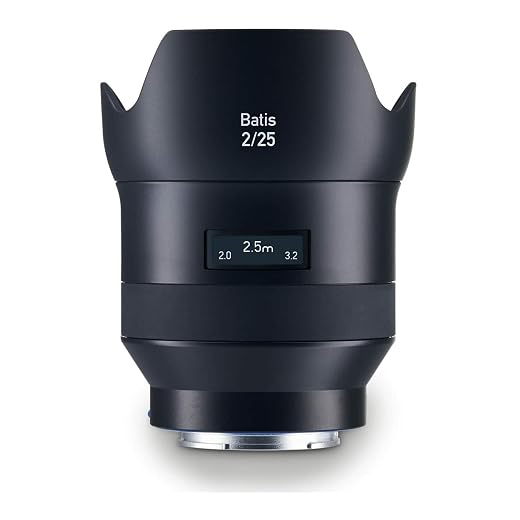
The ZEISS Batis 25mm f 2.0 represents a versatile optical design for full-frame Sony E-mount mirrorless cameras, combining a wide 72-degree angle of view with a fast f/2.0 maximum aperture. This focal length provides a natural, immersive wide-angle perspective that avoids the extreme geometric stretching found in ultra-wide focal lengths, making it ideal for environmental portraiture, street photography, architectural documentation, and reportage. The bright f/2.0 aperture gathers twice the light of an f/2.8 lens, facilitating low-noise handheld captures during twilight and yielding smooth background separation when isolating foreground subjects. Multicoated lens elements ensure stray light suppression, high contrast, and vivid color reproduction even when shooting directly toward directional ambient light sources.
Housing this optical assembly is a weatherproof metal construction engineered to seal the internal mechanics against intrusive dust and water spray during extended outdoor assignments. Like its 18mm sibling, the Batis 25mm features an innovative on-barrel OLED display that accurately shows focusing distance and near-to-far depth-of-field parameters in real time, delivering clear legibility in low-light environments. Focusing is swift and reliable, driven by an internal motor mechanism designed to reposition optical groups with high precision. Furthermore, the lens achieves a close minimum focusing distance of just 20cm, enabling photographers to capture intimate macro-style foreground details with dramatic context stretching back to the horizon. Unlike technical close-focus tools such as a daxiongmao endoscope camera with light that emphasize micro-inspection at the expense of framing aesthetics, this prime lens delivers rich optical depth and natural perspective throughout its focus throw.
This optic is best suited for visual storytellers, documentary shooters, and street photographers who need a fast, dependable zeiss wide angle lens sony e mount prime that balances context with subject emphasis. While its 72-degree field of view provides great creative flexibility, shooters whose primary focus is expansive night sky astrophotography or monumental interior architecture will benefit more from the broader 99.1-degree coverage provided by the Batis 18mm.
How to Choose the Right ZEISS Wide-Angle Lens
Selecting the best zeiss wide angle lens requires assessing camera sensor dimensions, field-of-view requirements, low-light demands, and physical handling needs. Because ZEISS designs prime lenses with distinct optical formulas tailored to specific mounts, matching the lens to your camera system is the essential first step.
- Camera Mount and Sensor Compatibility: The primary consideration when determining which zeiss wide angle lens to buy is your camera body. The ZEISS Batis 18mm f 2.8 and ZEISS Batis 25mm f 2.0 are designed specifically for full-frame Sony E-mount mirrorless cameras, projecting an image circle that covers large 35mm sensors without vignetting. Conversely, the ZEISS Touit 2.8 12 Wide-Angle Lens is designed specifically for Fujifilm X-mount cameras with APS-C sensors, delivering optimized edge sharpness calibrated to Fujifilm mirrorless bodies.
- Focal Length and Perspective: Field of view dictates the composition of your images. If your creative work involves sprawling landscapes, vast architectural interiors, or astrophotography where maximum scene inclusion is necessary, the 18mm Batis (99.1-degree view) and the 12mm Touit (89-degree view, 99-degree diagonal) deliver the super-wide perspective needed. For documentary work, street photography, and environmental portraits where you want contextual framing without dramatic perspective exaggeration, the 25mm Batis and its 72-degree field of view offer a more natural aesthetic.
- Aperture Speed and Low-Light Performance: While all three lenses feature high-grade optical designs, their maximum light-gathering capabilities vary. The Batis 25mm offers a fast f/2.0 aperture, providing superior low-light versatility and shallow depth of field for subject isolation. The Batis 18mm and Touit 12mm feature f/2.8 maximum apertures, which are well-suited for tripod-based landscape work, architectural interiors, and outdoor scenes where consistent sharpness across deep focus planes is prioritized over extreme background blur.
- On-Lens Information and Environmental Sealing: Photographers working in demanding outdoor environments should weigh physical barrel features. The Batis lenses feature an innovative OLED display on the lens body that shows real-time focus distance and depth of field, making manual focusing in low light or darkness exceptionally easy. Both Batis lenses also feature weatherproof metal construction with seals that protect against dust and water spray. The Touit lens offers a lightweight, compact footprint that pairs harmoniously with Fujifilm bodies, utilizing a floating elements design for consistent optical correction across close and distant focus ranges.
- Minimum Focusing Capability: Both the Touit 12mm (18cm minimum focus) and Batis 25mm (20cm minimum focus) excel at near-subject framing, allowing creators to place small foreground elements in sharp relief against expansive backgrounds for creative visual impact.
FAQ
Which ZEISS wide-angle lens is best for astrophotography and expansive landscapes?
The ZEISS Batis 18mm f 2.8 is the ideal full-frame lens for astrophotography, night sky observation, and sweeping landscape captures. With its 99.1-degree real angle of view, it captures vast expanses of the night sky and sprawling terrain in a single exposure. Furthermore, its integrated OLED display provides precise depth-of-field and focus distance readouts in low-light environments, enabling exact hyperfocal focusing in total darkness, while its weatherproof metal construction protects the optic against nighttime condensation and dust.
Can ZEISS Batis lenses be used on APS-C Sony mirrorless cameras?
Yes, ZEISS Batis lenses feature a standard Sony E mount and can be mounted directly onto APS-C Sony mirrorless cameras. When used on an APS-C body, the camera sensor crops the center of the full-frame image circle, resulting in a narrower effective field of view. The 18mm focal length provides a field of view equivalent to approximately 27mm on full-frame, while the 25mm focal length provides an equivalent field of view of approximately 37.5mm, turning these wide-angle primes into moderate wide and standard-length options.
How does the OLED display work on ZEISS Batis lenses?
The OLED display built into the barrel of ZEISS Batis lenses is an electronic screen that automatically shows the exact distance between the camera sensor and the focal plane, as well as the near and far limits of the depth of field based on the currently selected aperture. This display is bright and legible in bright sunlight and pitch-dark environments alike. It removes the guesswork associated with traditional printed distance scales, making it simple to calculate hyperfocal distances for landscapes and architectural photography.
What makes the ZEISS Touit 2.8 12 Wide-Angle Lens unique for Fujifilm X shooters?
The ZEISS Touit 2.8 12 Wide-Angle Lens is purpose-built for the Fujifilm X-mount system, combining an ultra-wide 12mm focal length with specialized optical corrections. It features ZEISS T* anti-reflective multicoating on all lens elements to eliminate reflections and boost color saturation, alongside an aspherical optical design and Distagon floating elements that minimize optical aberrations and keep lines straight. Its compact form factor and close 18cm minimum focusing distance make it an agile prime for architectural, interior, and landscape work on Fujifilm mirrorless bodies.
Why choose a ZEISS wide-angle prime lens over a standard wide zoom?
A ZEISS wide-angle prime lens is engineered for a fixed focal length, allowing optical designers to optimize sharpness, contrast, and optical aberration control without making the performance compromises inherent in complex zoom lens assemblies. The prime design enables faster maximum apertures like f/2.0 or f/2.8 in a compact, durable metal housing, while specialized features like floating optical elements and OLED distance displays deliver superior optical fidelity, exceptional edge-to-edge sharpness, and precise mechanical handling.
Where these figures come from
Every number on this page is read from the Amazon product listing: the price, the list price it is compared against, the specifications and the star rating. The star rating is the average left by Amazon buyers, not a score awarded by this site, and no product here has been handled or measured by us. The award ribbons are calculated across the products in this guide only, and each one states the figure it was based on.